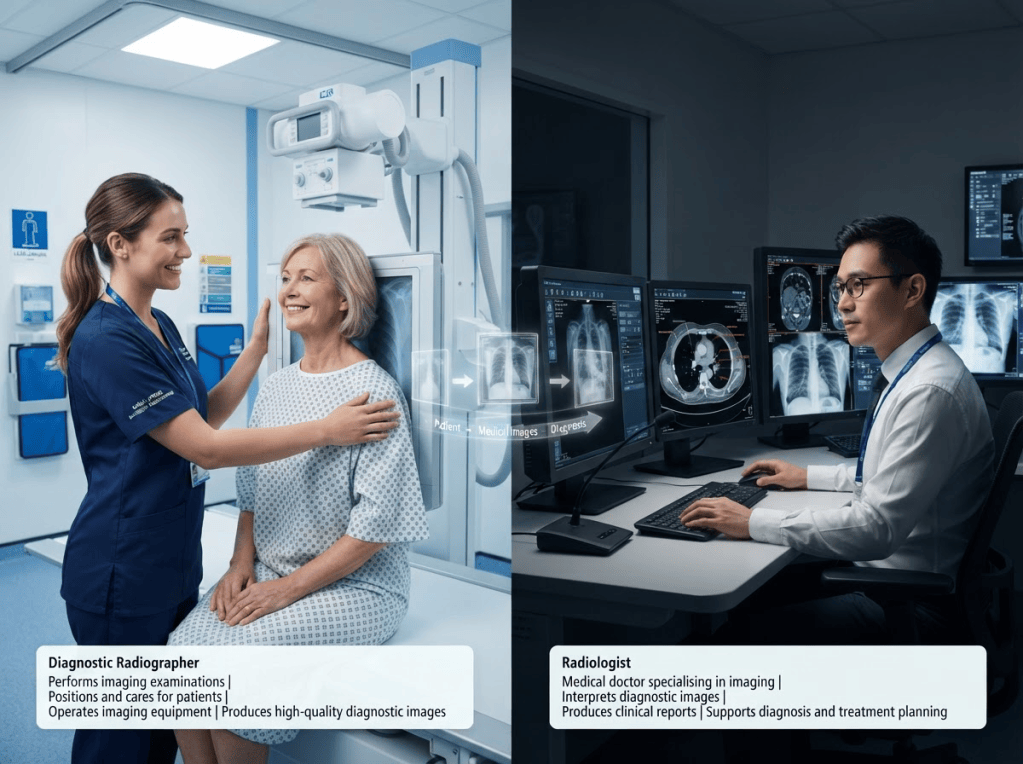
One of the most common misconceptions in medical imaging is that radiographers and radiologists are the same profession. Although their titles sound similar and they work closely together every day, their roles, responsibilities and training are very different.
If you’ve ever had an X-ray, CT scan, MRI or ultrasound, you’ve probably met a radiographer. However, the person who later reviewed your images and wrote a report for your doctor was most likely a radiologist.
Understanding the difference between these two professions is important because both play a vital role in diagnosing disease, planning treatment and improving patient care. Neither profession works in isolation, and modern healthcare depends on their collaboration.
As I continue my own journey towards becoming a radiographer, I’ve realised that many people—including those considering a career in healthcare—don’t fully understand what each professional does. This article aims to explain those differences in a simple and practical way.
What Is a Radiographer?
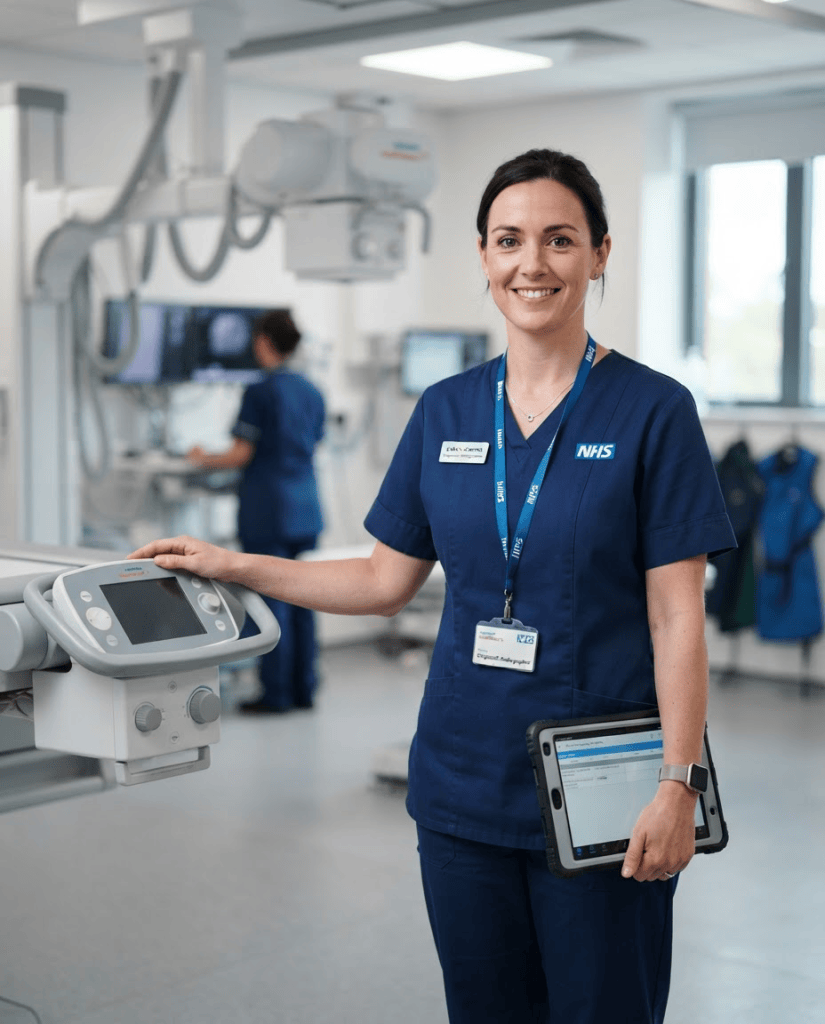
A radiographer is a registered healthcare professional trained to produce high-quality medical images that help diagnose and monitor disease.
Radiographers work directly with patients every day. They are often the first imaging professional a patient meets after being referred for an examination.
Their responsibilities go far beyond simply operating imaging equipment. They explain procedures, reassure anxious patients, position individuals correctly for examinations and ensure that images are produced safely while maintaining the highest possible quality.
Depending on their area of practice, radiographers may work with a variety of imaging technologies, including:
- Digital X-ray
- Computed Tomography (CT)
- Magnetic Resonance Imaging (MRI)
- Fluoroscopy
- Mammography
- Interventional imaging
- Nuclear medicine
Every image produced must be accurate because even small positioning errors or poor image quality can affect diagnosis and sometimes require repeat examinations.
Radiographers also have an important responsibility for radiation protection. Whenever ionising radiation is used, they carefully balance the need to obtain clear diagnostic images while keeping radiation exposure as low as reasonably practicable.
Beyond the technical aspects of the role, radiographers spend much of their day communicating with patients. They work with people of all ages and backgrounds, many of whom may be frightened, in pain or worried about what their scan might reveal. Compassion, empathy and professionalism are just as important as technical knowledge.
What Is a Radiologist?
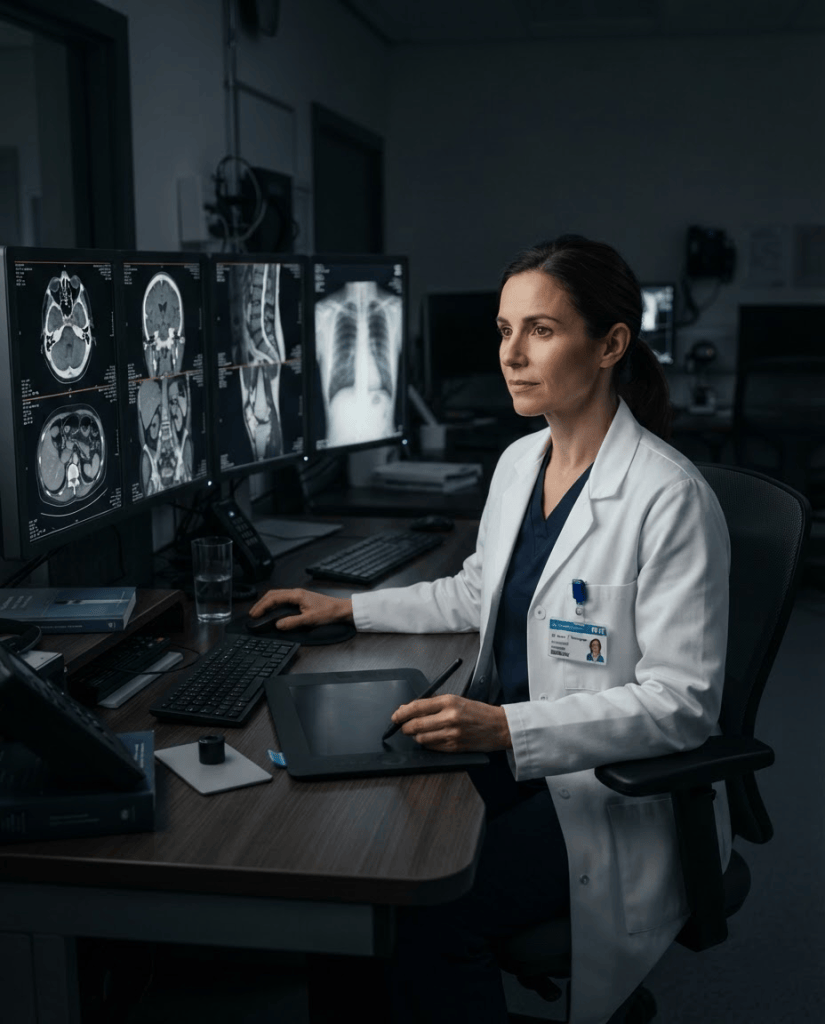
A radiologist is a medical doctor who specialises in diagnosing and, in some cases, treating disease using medical imaging.
After completing medical school and postgraduate specialty training, radiologists develop expertise in interpreting medical images and recognising subtle signs of disease that may not be obvious to others.
Once a patient’s images have been acquired, the radiologist carefully analyses them before producing a detailed report for the referring clinician.
Their report may answer questions such as:
- Is there evidence of disease?
- What is the most likely diagnosis?
- How advanced is the condition?
- Are additional investigations required?
- What findings should the treating team be aware of?
Radiologists don’t simply identify abnormalities—they place imaging findings into the wider clinical context, helping doctors make informed decisions about diagnosis and treatment.
Many radiologists also perform image-guided procedures, including biopsies, drain insertions and minimally invasive treatments that use imaging to guide instruments safely and accurately.
How Do They Work Together?
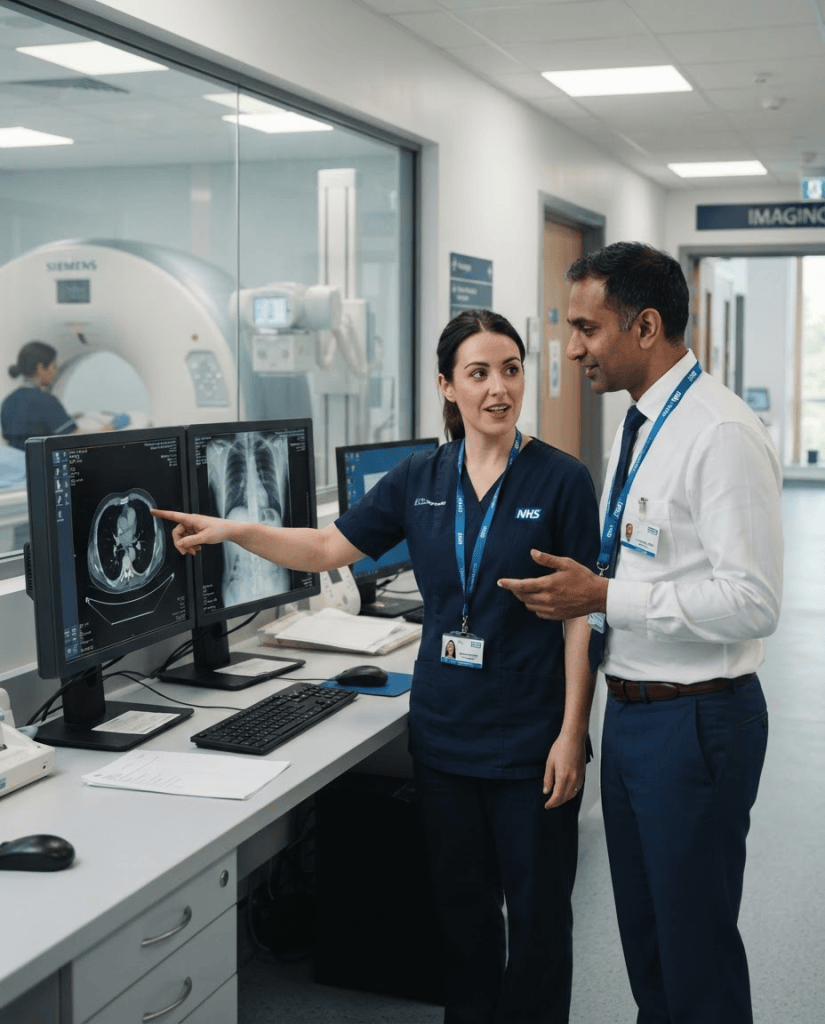
Although their responsibilities are different, radiographers and radiologists work as one team.
Imagine a patient arrives at hospital with severe chest pain.
The radiographer prepares the patient, explains the examination, positions them correctly and produces a high-quality chest X-ray.
The radiologist then reviews those images, identifies any abnormalities and prepares a report for the emergency department.
Without accurate images, the radiologist cannot provide an accurate interpretation.
Without expert interpretation, the images alone cannot guide patient care.
Both professionals depend on each other’s expertise.
This partnership exists across every imaging department and demonstrates why teamwork is one of the foundations of modern healthcare.
Education and Training
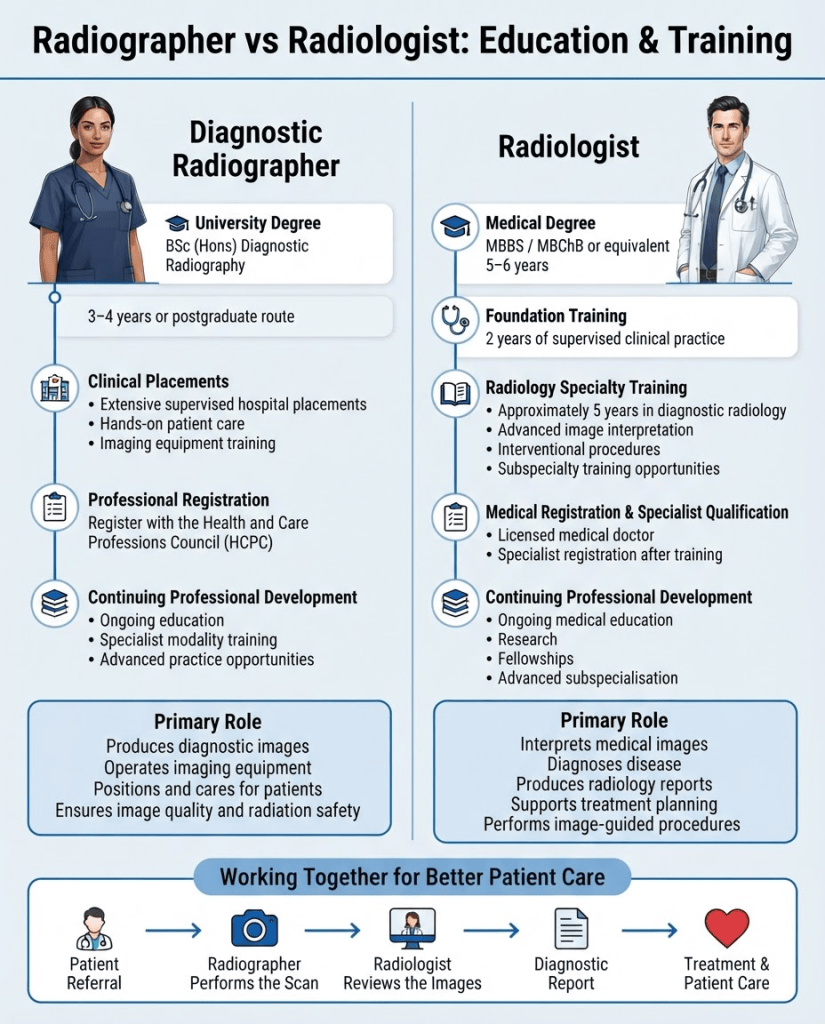
Although both professions work in medical imaging, their educational pathways are different.
Radiographers complete an approved university programme in diagnostic or therapeutic radiography before registering to practise. Their education combines academic learning with extensive clinical placements, allowing students to develop both technical skills and patient care experience.
Radiologists follow a different route. They first qualify as medical doctors before undertaking several years of specialist postgraduate training in radiology. This advanced training prepares them to diagnose disease, interpret complex imaging studies and perform specialised procedures.
Both careers involve continuous professional development throughout their working lives as imaging technology, clinical practice and research continue to evolve.
Diagnostic and Therapeutic Radiographers
Many people are surprised to learn that there are actually two main branches of radiography.
Diagnostic radiographers produce medical images that help diagnose disease. They work in areas such as X-ray, CT, MRI, fluoroscopy and mammography.
Therapeutic radiographers specialise in treating cancer using radiotherapy. They work closely with oncologists and medical physicists to plan and deliver highly precise radiation treatments while supporting patients throughout their treatment journey.
Although both professions share a common educational foundation, their day-to-day roles are quite different.
More Than Just Two Professions
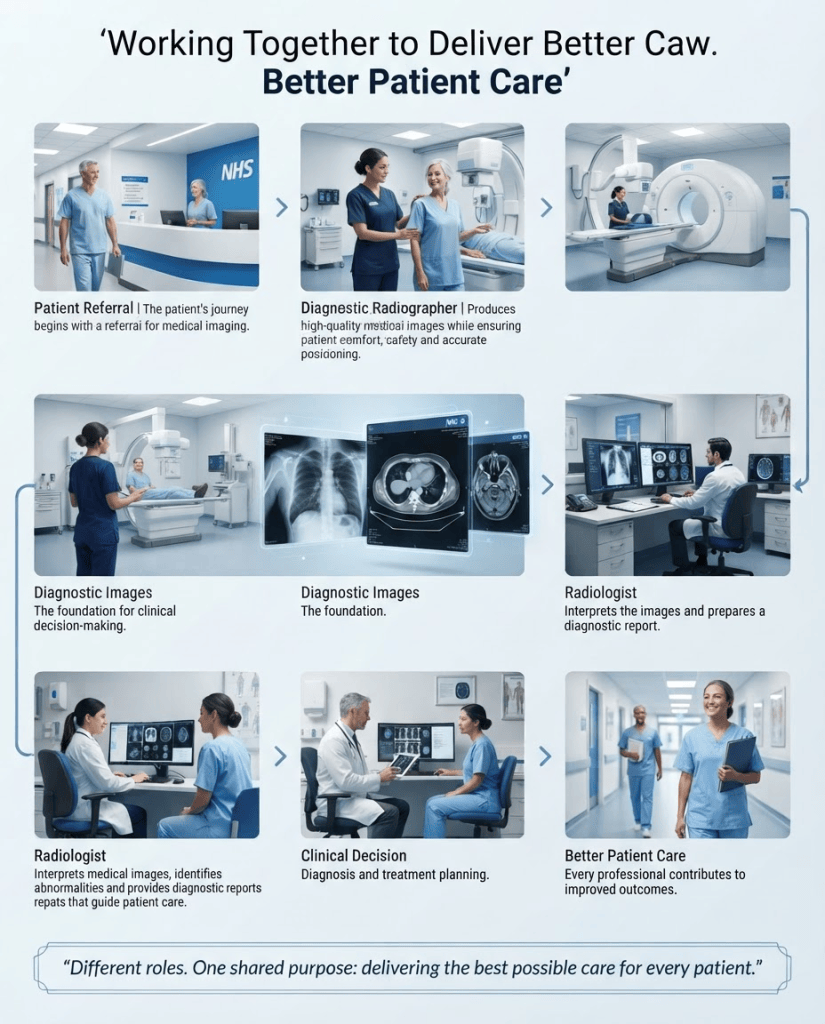
Medical imaging involves many professionals working together.
A patient’s journey may involve:
- Radiographers acquiring diagnostic images.
- Radiologists interpreting those images.
- Sonographers performing ultrasound examinations.
- Nurses supporting patient care.
- Medical physicists ensuring imaging equipment operates safely and accurately.
- Oncologists planning cancer treatment.
- Therapeutic radiographers delivering radiotherapy.
- Referring clinicians using imaging results to guide patient management.
Each member of the team contributes specialist knowledge, and together they provide safe, effective and patient-centred care.
Why This Difference Matters
Understanding the difference between radiographers and radiologists helps us appreciate the complexity of modern healthcare.
Patients often remember the healthcare professional who performed their scan, while others may only hear about the radiologist through the written report that follows.
Both roles are equally important.
Radiographers ensure high-quality images are produced safely and compassionately.
Radiologists transform those images into clinical information that supports diagnosis and treatment.
Together, they help clinicians answer one of healthcare’s most important questions:
“What is happening inside the patient’s body?”
Looking to the Future
Medical imaging continues to evolve rapidly.
Artificial intelligence, advanced imaging technologies and digital healthcare systems are changing how imaging departments operate. These innovations are not replacing radiographers or radiologists but are providing new tools that can improve efficiency, support clinical decision-making and enhance patient care.
As someone with a background in healthcare and computing who is preparing to study radiography, this is one of the areas I find most exciting. I believe the future of medical imaging will be shaped by collaboration between clinicians, engineers, researchers and data scientists, all working towards a common goal of improving healthcare.
Through Imaging Journal, I hope to continue exploring not only the people behind medical imaging but also the technology and innovation that will influence the next generation of patient care.
Final Thoughts
Radiographers and radiologists may have similar names, but they have distinct and complementary roles within healthcare.
Radiographers are the professionals who work directly with patients to produce high-quality diagnostic images safely and compassionately. Radiologists are specialist doctors who interpret those images and provide the clinical expertise that guides diagnosis and treatment.
Neither profession could achieve its full potential without the other.
The next time you have an imaging examination, remember that behind every scan is a team of skilled professionals working together to deliver the best possible care. Understanding these roles not only highlights the importance of teamwork but also gives us a greater appreciation for the people who make modern medical imaging possible.
Thank you for reading, and if you’re considering a career in medical imaging—or you’re simply curious about how these professions work—I hope this article has helped make the distinction a little clearer.
ABOUT THE AUTHOR:

Hi, I’m Ogochukwu Kester Agolo, the creator of Imaging Journal. I’m an aspiring radiographer with a background in healthcare and computing, documenting my journey into the world of medical imaging. Through this blog, I share what I’m learning about radiography, radiology, healthcare technology, and the future of diagnostic imaging as I work towards a career in the profession.


Leave a Reply